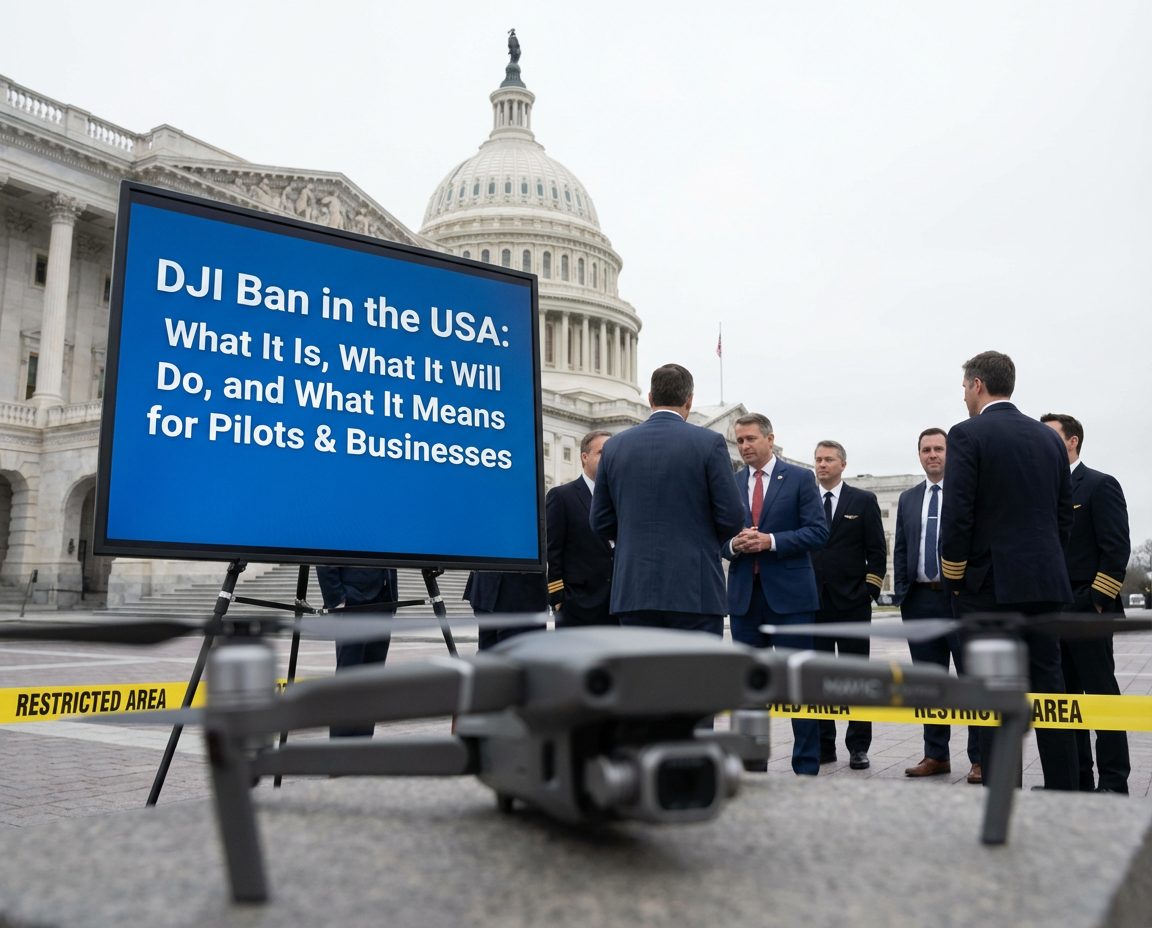
DJI Ban in the USA: What It Is, What It Will Do, and What It Means for Pilots & Businesses
The DJI Ban. Why Everyone’s Talking About It
The term DJI Ban has exploded across forums, social media, and industry headlines in late 2025 — and with good reason: the United States government has taken decisive action to block new sales and imports of DJI drones and other foreign-made unmanned aircraft systems (UAS), citing national security risks. This marks one of the most consequential regulatory shifts in the history of commercial and recreational drone use in the U.S.
As of December 22–23, 2025, the Federal Communications Commission (FCC) officially added DJI and other foreign drone manufacturers to its “Covered List,” effectively preventing new models from receiving equipment authorization and entering the U.S. market. Reuters
But what does this really mean? Is the DJI Ban retroactive? Is it for real? And *how will it affect everyday drone pilots, hobbyists, and businesses that depend on DJI and other foreign-made UAVs? In this comprehensive article, we’ll unpack the full story — from the legal background and national security rationale to the practical effects on flying, commerce, and innovation.
What Is the DJI Ban? A Clear, Plain-Language Explanation
At its core, the DJI Ban refers to the U.S. government’s decision to prohibit new importation and sales of DJI drones — and most other foreign-made drones — in the American market.
FCC “Covered List” and Equipment Authorization
The central mechanism for this ban is the FCC’s Covered List, a registry of equipment deemed a risk to U.S. national security. Devices on this list cannot be authorized for use within the U.S. because they rely on wireless communications technology subject to FCC regulation. DJI and other foreign-made drones were added to this list under new rules, meaning that no future models can obtain the necessary FCC approvals to be sold or imported.
What Is Being Banned — and What Is Not
Here’s the nuanced reality:
Banned (going forward):
• New DJI models, freshly manufactured products, and future releases
• Critical components from foreign manufacturers without specific clearance
• Imports of covered foreign drone equipment that lack FCC authorization
Not banned (for now):
• Existing DJI drones already approved and in the U.S.
• Machines already owned by pilots and businesses can still be flown
• Retailers can continue selling inventory that received prior authorization before the final rule took effect
This means the ban is not retroactive in a forced removal sense — you won’t suddenly have your DJI Mavic or Mini disabled or outlawed in the skies — but it does prevent new sales or imports without approval.
Why Is the DJI Ban Happening? National Security, Politics & Strategic Competition
The government’s justification for the DJI Ban centers on national security and supply chain concerns, particularly in the context of heightened technology competition between the United States and China.
National Security Concerns
U.S. policymakers argue that drones manufactured in China or other foreign countries could pose threats such as:
• Unauthorized surveillance or remote data exfiltration
• Hidden backdoors or firmware vulnerabilities
• Potential for foreign government influence or control
According to government statements, foreign drones and critical components pose “unacceptable risks to the national security of the United States and to the safety and security of U.S. persons.”
The FCC also cited major upcoming events like the 2026 World Cup and the 2028 Los Angeles Olympics as added motivation for tightening drone controls to secure national airspace against hostile actors. AP News
Legislative Background: The FY2025 National Defence Authorization Act
The most direct legal origin of the DJI Ban lies in Section 1709 of the Fiscal Year 2025 National Defense Authorization Act (NDAA), enacted by Congress in late 2024. This provision required a security audit of certain foreign drone manufacturers, including DJI and Autel Robotics, by December 23, 2025. If no audit was completed or if risks were deemed unacceptable, the manufacturers would automatically be added to the FCC’s Covered List.
Audit Deadline and the Automatic Ban Mechanism
A legislative quirk in the NDAA created a high-stakes deadline:
• DJI publicly noted that no government agency had begun the required audit by late 2025.
• Without a completed audit by December 23, 2025, DJI and others were automatically added to the Covered List — triggering the ban.
This effectively turned a procedural requirement into a de facto ban when agencies failed to act.
Is the DJI Ban Real? Separating Fact from Rumour
One of the major questions circulating among drone communities is: Is the DJI Ban real? The answer is yes — but with important context.
It’s Real — But It’s Not a “Ground All Drones” Order
The ban is real in that:
New DJI products cannot be approved for sale or import without special clearance.
DJI and other foreign manufacturers have been added to the FCC’s Covered List.
The U.S. government has publicly confirmed and implemented the rule.
However, it is not a sweeping, immediate ban like grounding all existing devices. Existing drones can continue to fly, be sold (if previously approved), and be maintained. Retail inventory manufactured before the rule still moves through the supply chain for now.
Why We Still See Confusion
The drone community’s confusion stems from:
• Past federal restrictions on DJI for military and government procurement
• State and local bans by Florida, Tennessee, and other jurisdictions
• Legislative language that sounded broader than the final FCC implementation
Separating the “DJI Ban” as commonly discussed on social media from the technical regulatory ban is key: what’s actually happening is highly specific and tethered to FCC equipment authorization, not a blanket criminal prohibition on ownership.
How the DJI Ban Will Affect Pilots
For recreational and hobby pilots, the DJI Ban is a shock — but not a shutdown.
Current DJI Owners: What Happens to Your Drone
If you already own a DJI drone — whether it’s a Mini, Air, Mavic, or Inspire — you can continue flying it. There is no automatic remote disabling, confiscation, or revocation of current FCC approvals.
However:
• Future firmware updates might be affected if they require new FCC authorization.
• Access to customer support, spare parts, and repairs could dwindle over time as official retail channels dry up.
• Third-party accessories tied to new hardware releases could become scarce.
These indirect effects mean that hobbyists may be able to fly their current drones for years, but the ecosystem around those drones may deteriorate without new support.
Buying DJI Drones After the Ban
After the ban takes full effect:
• Buying brand-new DJI products in the U.S. will no longer be possible through proper FCC-authorized channels.
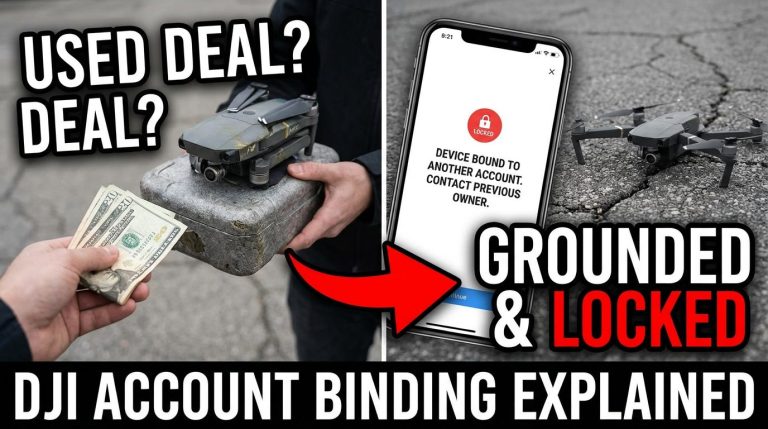
• Second-hand and previously imported units may still circulate, although legality could become a gray area.
• Some pilots might seek to purchase drones through international markets, though that carries legal and logistical risks.
Impact on Skills, Technician Workforce & Hobbyist Culture
The drone community thrives on rapid innovation and access to the latest platforms. With DJI cut off from future updates in the U.S., pilots will:
• Lose access to next-generation flight tech
• See shrinking availability of parts and upgrades
• Face uncertainty in training environments reliant on DJI standards
How the DJI Ban Will Affect Businesses
Pilot hobbyists aren’t the only ones affected — entire industries rely on DJI drones for commercial operations.
Enterprise & Commercial Operators
Companies in sectors such as:
• Real estate photography
• Film, TV, and media production
• Agriculture (crop monitoring and mapping)
• Surveying and construction
• Energy infrastructure inspection
• Search & rescue and public safety
all commonly use DJI drones because of their reliability, affordability, and advanced sensors.
Once new DJI models can’t be sold or imported:
Businesses won’t be able to refresh fleets with modern hardware.
Warranty support and parts availability will become unpredictable.
Repair services may dry up as official distributor networks shrink.
This will force many companies to consider alternative solutions, possibly at higher cost or lower availability.
Supply Chain & Innovation Impacts
U.S. businesses that relied on DJI technology will have to pivot. This includes:
• Drone repair shops
• Training providers
• Software integrators
• Drone-based service companies
The DJI Ban could also accelerate investment in domestic drone manufacturers, who now face a rare opportunity to fill the void left by DJI’s absence. But replacing DJI’s dominant market share — estimated at around 70–80% globally — will take time.
What the DJI Ban Means for the Broader Drone Industry
The DJI Ban represents a potential turning point in how the U.S. drone industry evolves.
Domestic Drone Makers: A Growth Opportunity
Companies like Skydio, Freefly, and other U.S.-based or allied manufacturers could see increased demand from commercial and government customers looking for FCC-approved alternatives. This could broaden competition and spur innovation domestically.
Regulatory Precedent for Other Technologies
The FCC’s use of the Covered List to effectively bar whole product categories sets a precedent for future tech. This isn’t just about drones — it signals how national security concerns might translate into market exclusions across other emerging technologies that rely on wireless communications.
Global Trade & Tech Competition
China’s Ministry of Commerce has condemned the ban as a discriminatory practice, urging the U.S. to reverse course. This reflects broader tensions in U.S.–China tech competition and raises questions about how governments balance security with open markets.
Will the DJI Ban Ever Be Reversed or Modified?
There is still room for change. Some possible paths include:
A completed national security audit that clears DJI and removes it from the Covered List
Legislation that changes how the audit process works or alters the Covered List mechanism
Negotiated agreements between U.S. and Chinese regulators on data security and transparency
However, given the current political climate and strategic competition concerns, reversal seems unlikely in the near term.
Conclusion: The DJI Ban Is Real, But Complex
The DJI Ban isn’t a simple prohibition on owning or flying drones you already have, but it is a real, regulatory shift that will reshape the U.S. drone landscape. By blocking new DJI and foreign-made drones from accessing the U.S. market, the ban:
• Halts importation and sale of new DJI models
• Protects current owners’ ability to use existing drones
• Forces pilots and businesses to adapt or transition to alternative platforms
• Creates opportunities for domestic competitors
The long-term impact will be felt across hobbyist communities, commercial drone operations, and the broader tech ecosystem — with ripple effects for innovation, supply chains, and international tech competition.
If you fly drones, rely on them for your business, or follow drone policy, the DJI Ban is one of the most significant developments in years. Stay informed, plan ahead, and keep flying safely — wherever your drones take you.