Drone Laws in Ontario, Canada (2026)
Ontario is not only the most populous province in all of Canada, it is also one of the most beautiful. With tons of breathtaking views, tourist destinations, and growing communities, flying a drone in Ontario can open up incredible opportunities. From real estate and tourism content to inspections and cinematic videography, the potential for some serious UAV action is extremely high. However, Ontario is also one of the most legally complex regions in Canada for drone operations due to the combination of federal aviation laws, provincial restrictions, and municipal bylaws.
Many drone pilots make the mistake of relying on a single app or assuming that if the airspace is clear, they’re legally allowed to fly. In reality, staying compliant in Ontario requires a multi-layered understanding of regulations, particularly those enforced by Transport Canada.
This guide provides a complete breakdown of drone laws in Ontario, including where you can and cannot fly, how provincial and national parks are regulated, and how to avoid costly mistakes that could result in fines or loss of certification.
Understanding Who Regulates Drone Laws in Ontario
Drone regulations in Ontario are governed by multiple authorities, and understanding how these layers interact is critical for legal compliance.
At the federal level, Transport Canada oversees all aviation-related matters, including drones. This includes licensing requirements, airspace rules, and operational limitations. Every drone pilot in Ontario—regardless of where they fly—must comply with federal aviation laws first and foremost. These rules are outlined in the Canadian Aviation Regulations (CARs), specifically Part IX for remotely piloted aircraft systems.
At the provincial level, the Ontario government controls land use through agencies such as Ontario Parks. While they do not regulate airspace, they do control where you can take off and land. This creates a situation where you may be legally allowed to fly in the airspace above a location but prohibited from launching your drone from that land. This distinction is critical and often misunderstood by new and even experienced drone pilots.
Municipal governments add another layer of complexity. Cities like Toronto, Ottawa, and Mississauga enforce bylaws that restrict or prohibit drone use in public parks and urban spaces. These bylaws are enforceable and can result in fines even if you are compliant with federal aviation rules. Understanding all three levels—federal, provincial, and municipal—is essential for safe and legal drone operations in Ontario.
Federal Drone Laws in Canada (What Applies in Ontario)
All drone operations in Ontario fall under federal law, meaning the same baseline rules apply whether you are flying in Toronto, Thunder Bay, or a remote rural area.
Drone pilots must first determine which category their aircraft falls into. Micro drones (under 250 grams) are exempt from licensing and registration requirements but must still be operated safely. This includes avoiding aircraft, maintaining control, and not endangering people. Many pilots assume micro drones are “free from rules,” which is incorrect—they are simply subject to fewer administrative requirements.
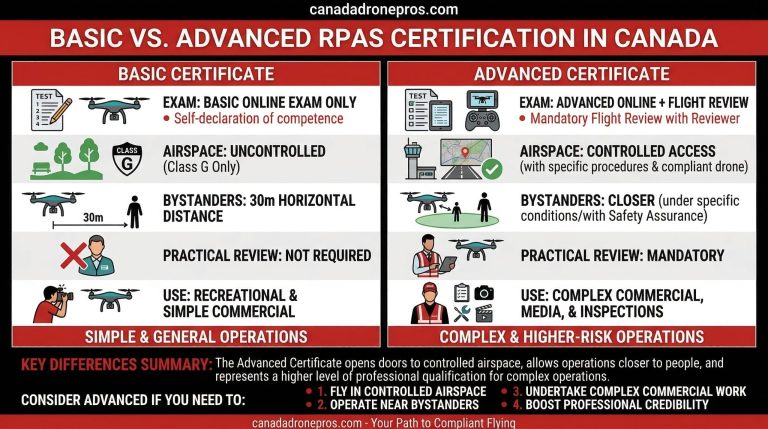
For drones between 250 grams and 25 kilograms, registration is mandatory, and pilots must obtain either a Basic or Advanced certificate. Basic operations are limited to flying away from people and outside controlled airspace. Advanced operations allow pilots to fly in more complex environments, including controlled airspace and near people, but require additional certification and a flight review.
These federal rules form the foundation of all drone operations in Ontario. Even if you comply with provincial and municipal regulations, violating federal aviation law can result in severe penalties, including fines and suspension of your drone pilot certificate.
Airspace Rules and Controlled Zones in Ontario
Airspace is one of the most critical aspects of drone law, particularly in Ontario, where densely populated areas and major airports create complex airspace structures.
Controlled airspace surrounds major airports and urban centers, including Toronto Pearson, Billy Bishop Airport, and Ottawa International Airport. Flying in controlled airspace requires authorization, which must be obtained through NAV Drone. This app allows pilots to view airspace classifications, submit authorization requests, and understand altitude restrictions.
Even in uncontrolled airspace, pilots must remain vigilant. Aircraft frequently operate at low altitudes in rural areas, especially helicopters and small planes. Just because authorization is not required does not mean the area is risk-free. Pilots must always yield to manned aircraft and maintain situational awareness.
Understanding airspace is not just about legality—it’s about safety. A drone operating in the wrong place at the wrong time can create a serious hazard for aircraft. This is why airspace knowledge is heavily emphasized during Transport Canada flight reviews.
National Parks in Ontario: Complete Drone Ban
National parks in Ontario are strictly regulated, and drone use is generally prohibited.
Parks Canada enforces a blanket ban on recreational drone use in all national parks. This includes well-known destinations such as Bruce Peninsula National Park, Point Pelee National Park, and Rouge National Urban Park. The ban applies regardless of drone size, meaning even micro drones are not allowed.
The reason for this strict policy is multifaceted. Drones can disturb wildlife, disrupt visitor experiences, and pose safety risks in crowded environments. National parks are protected areas, and drone restrictions are part of broader conservation efforts.
Commercial drone use may be permitted under special circumstances, but it requires formal approval and permits. These are typically granted for research, filmmaking, or government-related work. For most drone pilots, the practical takeaway is simple: do not attempt to fly in national parks without explicit authorization.
Ontario Provincial Parks: Strict Restrictions
Provincial parks in Ontario are another major restricted area for drone pilots.
Ontario Parks generally prohibits recreational drone use within park boundaries. This policy is designed to protect wildlife and maintain a peaceful environment for visitors. Unlike federal airspace rules, these restrictions apply to land use, meaning you cannot legally take off or land within a provincial park.
Commercial operations may be permitted, but they require prior approval and permits. These are typically limited to professional projects such as film production or environmental research. Even with approval, strict conditions often apply.
One important nuance is that pilots can sometimes operate outside park boundaries and capture footage from a distance. However, this must be done carefully to ensure the drone does not enter restricted airspace or violate other regulations. Understanding these boundaries is essential for avoiding fines and maintaining compliance.
Municipal Drone Laws in Ontario (Toronto and Beyond)
Municipal bylaws are one of the most overlooked aspects of drone regulation in Ontario.
Cities like Toronto have strict rules prohibiting drone use in public parks without a permit. These bylaws are enforced locally and can result in fines even if the pilot is compliant with federal regulations. Other cities, including Mississauga and Brampton, have similar restrictions.
The purpose of these bylaws is to protect public safety and privacy. Urban environments present unique challenges, including dense populations, traffic, and infrastructure. Municipal governments have the authority to regulate how public spaces are used, including restricting drone operations.
For drone pilots, this means that checking the airspace is not enough. You must also verify whether the location you plan to launch from is legally accessible. This often requires reviewing city bylaws or contacting local authorities.
Aerodromes and Airport Proximity Rules
Aerodromes are not limited to major airports, they include any location where aircraft can take off or land.
This includes:
- Small rural airstrips
- Heliports
- Seaplane bases
Drone pilots must always be aware of nearby aerodromes, even if they are not clearly marked. Aircraft operating near aerodromes are typically at low altitude, increasing the risk of collision.
Even in areas where flying is technically allowed, pilots must yield to all aircraft and avoid interfering with operations. This is a fundamental rule of Canadian aviation law and applies in all situations.
Emergency Zones and Temporary Restrictions
Drone flights are strictly prohibited near emergency operations.
This includes:
- Wildfires
- Police incidents
- Search and rescue operations
Temporary restrictions are often issued through NOTAMs (Notices to Airmen), which must be checked before every flight. These restrictions can change rapidly and may not be immediately visible in all apps.
Flying near an emergency scene can interfere with critical operations and put lives at risk. As a result, penalties for violations are severe and strictly enforced.
Where You Can Legally Fly Drones in Ontario
Despite the restrictions, there are still many legal flying opportunities for drone operations in Ontario.
Rural areas outside controlled airspace are often the safest and most flexible environments. Private property is another viable option, provided you have the owner’s permission and comply with federal regulations.
Uncontrolled airspace (Class G) offers the greatest flexibility, but pilots must still remain vigilant and follow all safety rules. Identifying these areas requires careful planning and the use of multiple tools.
Final Thoughts: Operating Drones Legally in Ontario
Flying a drone in Ontario requires more than just technical skill—it requires a deep understanding of the law.
The key to compliance is recognizing that no single tool or rule covers everything. You must consider airspace, land use, and local bylaws together. Ignoring any one of these can result in legal issues.
Ultimately, the most successful drone pilots are those who approach each flight with a professional mindset. They plan thoroughly, verify all regulations, and prioritize safety above all else.
Conclusion on Drone Laws in Ontario:
To fly legally in Ontario:
- Federal law governs the sky
- Provincial rules govern protected land
- Municipal bylaws govern public spaces
Master all three, and you’ll not only stay compliant you’ll operate at a professional level that sets you apart in the industry.